
PVDF (Kynar)
Polyvinylidene Fluoride
A tough fluoropolymer with exceptional chemical inertness and UV resistance for demanding process and outdoor applications.
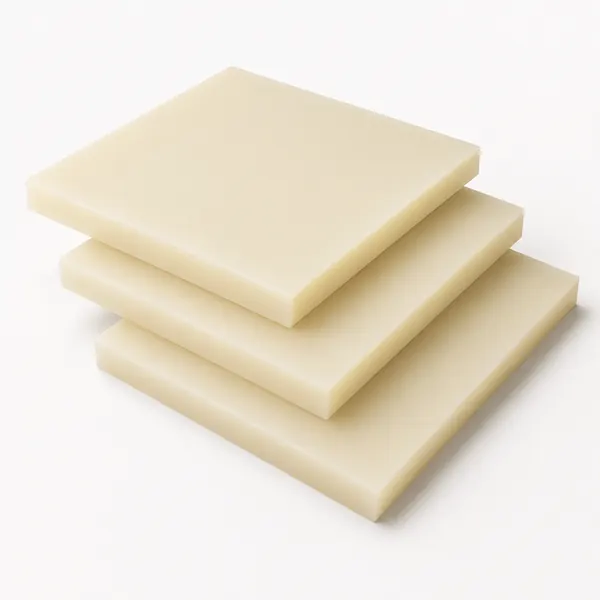
Overview
PVDF (Polyvinylidene Fluoride), commonly known by the Arkema trade name Kynar, is a semi-crystalline fluoropolymer that combines broad chemical resistance with mechanical toughness not found in softer fluoropolymers like PTFE. While PTFE is chemically inert but soft and easily deformed, PVDF retains more structural rigidity while still resisting aggressive acids, halogens, and oxidising chemicals at elevated temperatures. PVDF also exhibits excellent UV stability and weather resistance, making it appropriate for outdoor chemical applications. It is widely used in semiconductor chemical distribution, offshore/marine piping, and chemical processing equipment where purity, chemical inertness, and structural integrity are all required.
Working properties
-
Chemical resistance
PVDF resists a very broad range of aggressive chemicals including strong mineral acids, halogens (chlorine, bromine, fluorine compounds), oxidising acids, and many organic solvents. It is particularly valued in semiconductor wet process applications where high-purity chemical distribution without contamination is critical.
-
Mechanical strength vs PTFE
Unlike PTFE, which is soft and prone to creep under load, PVDF maintains meaningful stiffness and strength in structural applications. It can be machined to hold tighter tolerances and used in load-bearing fittings and structural components where PTFE would deform.
-
UV and outdoor weatherability
PVDF is inherently stable under UV exposure and outdoor weathering. It is one of the most weather-resistant engineering plastics available and retains mechanical and chemical properties after prolonged outdoor service.
-
Thermal performance
PVDF maintains useful mechanical properties at elevated temperatures, though below the level of PEEK or PPS. It is suited to continuous service at temperatures meaningfully above where PVC or CPVC would be appropriate.
-
Purity and extractables
High-purity grades of PVDF are widely used in semiconductor and pharmaceutical fluid handling because the material contributes minimal extractables and is free from plasticisers — important where trace contamination of process fluids is a concern.
-
Machinability
PVDF machines reasonably well using standard CNC equipment. It requires sharp tooling and appropriate feeds to produce clean surfaces. It can also be welded by hot-gas and butt-fusion techniques for fabricated piping systems.
Typical uses
- Semiconductor chemical distribution — ultra-high-purity piping, fittings, and tanks
- Offshore and marine piping in saline and chemically aggressive environments
- Chemical process equipment exposed to halogens, strong acids, and oxidisers
- Outdoor chemical storage and handling where UV stability is required
- Pharmaceutical fluid handling requiring low extractables
Things to confirm before ordering
- Grade — standard or high-purity semiconductor grade; purity requirements vary significantly between industrial and semiconductor/pharma applications.
- Chemical exposure — confirm the specific chemicals, concentrations, and temperatures; while PVDF is broadly resistant, certain ketones and esters can affect it.
- Form — sheet, rod, or tube; for piping applications, confirm wall thickness, OD, and pressure requirements.
- Welding or mechanical joining — for fabricated systems, specify the joining method so appropriate product and fittings can be sourced.
How does PVDF (Kynar) compare?
-
PTFE →
PTFE is softer and more chemically inert across an even broader range of chemicals, but creeps under load and cannot be used in structural or pressurised applications where PVDF is appropriate. Use PTFE for liners, gaskets, and non-structural chemical contact; use PVDF for structural components and piping.
-
CPVC →
CPVC is significantly cheaper but has lower chemical resistance — particularly to halogens and strong oxidising acids where PVDF is required. CPVC also has a lower service temperature. PVDF is the upgrade when CPVC chemistry or temperature limits are exceeded.
Properties on this page are indicative only — exact mechanical, thermal, and chemical values vary by grade, filler, and manufacturer. Always verify suitability for your specific application before ordering. Need a certified grade? (FDA, UL94, food-grade, medical-grade, ISO) — ask us via WhatsApp and we will advise on what is available.