
CPVC
Chlorinated Polyvinyl Chloride
A higher-temperature variant of PVC with good chemical resistance for hot fluid handling and corrosive environments.
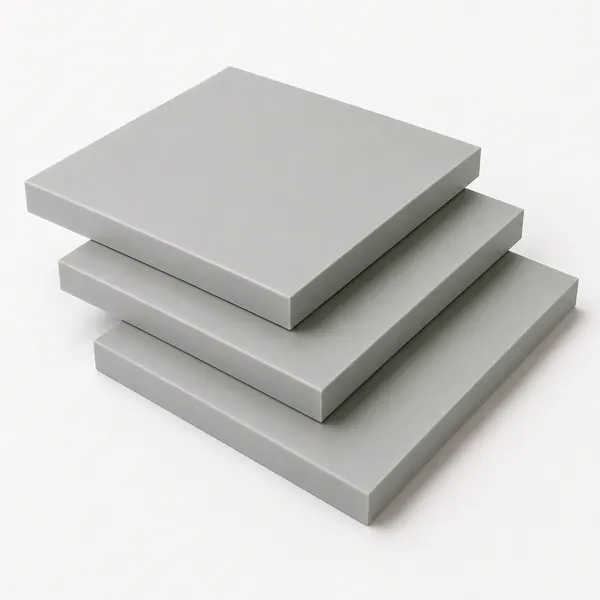
Overview
Chlorinated Polyvinyl Chloride (CPVC) is produced by further chlorinating standard PVC, which raises its maximum service temperature significantly compared with PVC. This makes CPVC suitable for hot water, hot process chemicals, and elevated-temperature fluid handling applications where standard PVC would soften or distort. CPVC retains the broad chemical resistance of PVC while extending the useful temperature range. It is widely used in chemical processing pipe systems, hot water plumbing, and industrial fluid handling where a cost-effective corrosion-resistant material is needed at temperatures above the PVC service limit.
Working properties
-
Elevated temperature capability vs PVC
CPVC operates at significantly higher continuous service temperatures than standard PVC. This is its primary reason for selection over PVC — when fluid or ambient temperatures exceed what PVC can safely handle, CPVC is the next step up without moving to far more expensive fluoropolymers.
-
Chemical resistance
CPVC resists a broad range of acids, bases, salts, and many organic compounds. It shares similar chemical resistance to PVC in most environments but extends that resistance to higher temperatures. Confirm specific chemical compatibility at your operating conditions before specifying.
-
Rigidity
CPVC is a rigid material that maintains useful stiffness at elevated temperatures. It is not intended for flexible or dynamic applications. Under sustained mechanical load at elevated temperature, thermal creep should be considered.
-
Machinability and joining
CPVC machines similarly to PVC — it cuts, drills, and mills readily. It can be solvent-cemented using CPVC-specific cement (PVC cement is not interchangeable at elevated temperatures). It can also be welded using hot-gas techniques.
-
Impact resistance
CPVC is more brittle than standard PVC, particularly at lower temperatures. Impact resistance should be considered in environments where thermal shock or physical impact at cold temperatures is possible.
Typical uses
- Hot water and process fluid piping in corrosive chemical environments
- Chemical storage tank lining and fabricated chemical vessels
- Industrial fluid handling components — flanges, fittings, valve bodies
- Hot process chemical distribution systems in plating and surface treatment lines
- Replacement for stainless steel pipe where chloride corrosion is a concern
Things to confirm before ordering
- Operating temperature — confirm the maximum continuous fluid and ambient temperatures; CPVC has a service limit that must not be exceeded under load.
- Chemical compatibility — confirm your specific fluid chemistry including concentration and temperature; CPVC is broadly resistant but not universal.
- Wall thickness and pressure rating — for piping or tube applications, confirm the required pressure rating at your operating temperature.
- Joining method — specify whether solvent cement or mechanical joining is intended; confirm correct CPVC-grade solvent cement is used.
How does CPVC compare?
-
PVC →
Standard PVC is significantly cheaper but has a lower maximum service temperature. For ambient-temperature chemical handling, PVC is often sufficient. CPVC is the next step when temperature is the limiting factor.
-
PVDF (Kynar) →
PVDF offers superior chemical resistance (particularly to halogens and strong oxidisers) and a higher service temperature than CPVC. It is more expensive. For highly aggressive environments, PVDF is the appropriate upgrade from CPVC.
Properties on this page are indicative only — exact mechanical, thermal, and chemical values vary by grade, filler, and manufacturer. Always verify suitability for your specific application before ordering. Need a certified grade? (FDA, UL94, food-grade, medical-grade, ISO) — ask us via WhatsApp and we will advise on what is available.