
Tectron / PPS
Polyphenylene Sulphide
A high-temperature, chemically inert engineering plastic with inherent flame resistance and excellent dimensional stability.
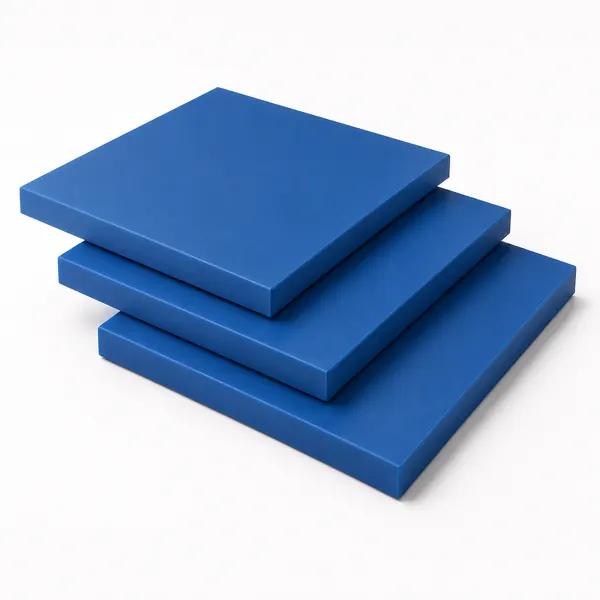
Overview
Polyphenylene Sulphide (PPS) is a semi-crystalline high-performance thermoplastic supplied under several trade names, with Tectron being a common one used in the engineering plastics market. PPS is valued for its outstanding chemical resistance — among the broadest of any engineering thermoplastic — combined with good elevated-temperature performance, inherent flame resistance, and excellent dimensional stability. Unfilled PPS is brittle; it is almost always used in glass-filled or glass/mineral-filled compound form for structural applications. PPS is widely used in chemical processing, automotive, and semiconductor equipment where its combination of inertness and stability is essential.
Working properties
-
Chemical resistance
PPS offers exceptional resistance to a very broad range of chemicals — acids, bases, solvents, fuels, and hydraulic fluids — making it one of the most chemically inert engineering thermoplastics available. It is one of the few materials that retains good properties after prolonged chemical exposure at elevated temperatures.
-
High continuous service temperature
PPS can operate continuously at temperatures above most engineering plastics. Glass-filled grades extend this capability further and are used in applications where PEEK might otherwise be specified but cost is a driver.
-
Inherent flame resistance
PPS is inherently non-flammable without halogenated additives. This is a significant advantage in applications where material flammability classification is important.
-
Brittleness in unfilled form
Unfilled PPS has relatively low impact strength and is brittle compared with PEEK or Ultem at the same temperature. Glass-filled grades improve stiffness and impact resistance. The filler choice should match the mechanical requirements of the application.
-
Dimensional stability
PPS has very low moisture absorption and excellent dimensional stability in service. Machined parts hold tight tolerances well, making PPS a strong choice for precision components in humid or wet chemical environments.
-
Machinability
PPS machines reasonably well on standard CNC equipment, though glass-filled grades increase tool wear. Parts can be machined to close tolerances. Standard tooling appropriate for other high-performance plastics is used.
Typical uses
- Chemical processing equipment — pump housings, impellers, valve bodies
- Semiconductor wet bench components and wafer carriers
- Automotive underbonnet and fuel system components
- Electrical connectors and precision insulating components
- High-temperature structural parts in corrosive environments
Things to confirm before ordering
- Grade — glass-filled (GF40 is common) or unfilled; unfilled PPS is rarely used structurally due to its brittleness.
- Colour — PPS is typically dark grey or black; confirm if colour is relevant to your application.
- Chemical exposure — while PPS is broadly chemically resistant, confirm compatibility with your specific process chemicals, particularly at elevated temperatures.
- Certifications — if traceable material documentation is required, specify at enquiry.
How does Tectron / PPS compare?
-
PEEK →
PEEK is tougher (especially in unfilled form), has a higher maximum service temperature, and is better in certain solvent environments. PPS is typically a lower-cost option where PEEK's full performance is not required.
-
PVDF (Kynar) →
PVDF has outstanding chemical resistance to halogens and strong oxidising acids where PPS may not be suitable. PVDF is less stiff and has a lower maximum service temperature than PPS glass-filled grades.
Properties on this page are indicative only — exact mechanical, thermal, and chemical values vary by grade, filler, and manufacturer. Always verify suitability for your specific application before ordering. Need a certified grade? (FDA, UL94, food-grade, medical-grade, ISO) — ask us via WhatsApp and we will advise on what is available.