
NBR (Nitrile Rubber)
Acrylonitrile Butadiene Rubber
The standard oil-resistant rubber for seals, gaskets, and fluid handling in petroleum, fuel, and hydraulic fluid environments.
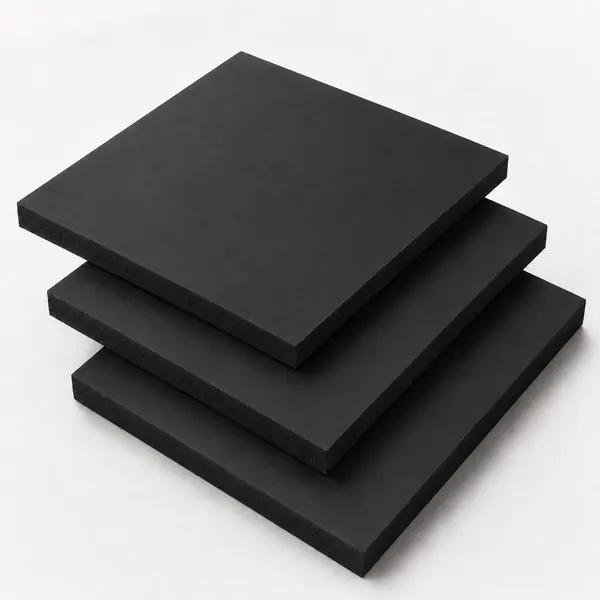
Overview
NBR (Nitrile Rubber, also known as Buna-N) is the most widely used synthetic rubber where oil and fuel resistance is required. The acrylonitrile content can be varied — higher nitrile content gives better oil resistance but reduces low-temperature flexibility. NBR is the default choice for seals, gaskets, and O-rings in hydraulic systems, fuel systems, and general industrial machinery. It is significantly better than natural rubber or SBR in oil environments, and outperforms EPDM where petroleum-based fluids are present. NBR is not suitable for ozone, UV, or high-temperature oxidising environments.
Working properties
-
Oil and fuel resistance
NBR offers excellent resistance to petroleum-based oils, fuels, greases, and hydraulic fluids. This is its defining property and the primary reason for its selection over natural rubber and EPDM in oil-contact sealing and gasketing applications.
-
Acrylonitrile content and trade-offs
Higher acrylonitrile (ACN) content improves oil resistance but reduces low-temperature flexibility and increases hardness. Lower ACN content improves cold-temperature performance but reduces oil resistance. Standard grades are formulated to balance these properties for most industrial applications.
-
Mechanical properties
NBR has good abrasion resistance and tensile strength for a synthetic rubber, making it useful not only for seals but also for general-purpose sheet, matting, and wear applications in oil-containing environments.
-
Ozone and UV resistance
NBR has poor ozone and UV resistance and should not be used for outdoor or ozone-exposed applications. Surface cracking under ozone exposure is a characteristic failure mode.
-
Temperature range
NBR performs across a moderate temperature range suitable for most industrial hydraulic and lubrication systems. For very high-temperature oil service (above typical NBR limits), Viton (FKM) is the appropriate alternative.
-
Incompatibility with EPDM
NBR and EPDM are fundamentally incompatible in oil environments — EPDM swells rapidly in petroleum-based oils. Confirming the correct rubber type for the fluid environment is critical in any sealing application.
Typical uses
- Hydraulic system seals, O-rings, and gaskets
- Fuel system seals and diaphragms
- Oil-resistant general-purpose gasket sheet and matting
- Machine tool seals and way covers in oil-lubricated environments
- Automotive and industrial hose covers and lining
Things to confirm before ordering
- Fluid contact — confirm the specific oils, fuels, or hydraulic fluids and their temperatures; not all petroleum-based fluids are equally compatible.
- Hardness — specify required Shore A hardness; standard gasket sheet is typically medium hardness.
- Ozone or outdoor exposure — if the part will be outdoors or near electrical equipment, NBR is not appropriate; specify EPDM instead.
- Temperature range — for very high-temperature oil environments, consider Viton (FKM) as a higher-performance alternative.
How does NBR (Nitrile Rubber) compare?
-
EPDM →
EPDM has excellent weather and ozone resistance but swells rapidly in petroleum-based oils. These two materials serve fundamentally different environments — NBR for oil, EPDM for water, steam, and weather.
-
Viton (FKM) →
Viton offers superior oil resistance at higher temperatures and broader chemical resistance. It is the upgrade from NBR for demanding high-temperature oil or aggressive chemical environments, at significantly higher cost.
Properties on this page are indicative only — exact mechanical, thermal, and chemical values vary by grade, filler, and manufacturer. Always verify suitability for your specific application before ordering. Need a certified grade? (FDA, UL94, food-grade, medical-grade, ISO) — ask us via WhatsApp and we will advise on what is available.