
POM SD / ESD 225
Electrostatic Dissipative Polyoxymethylene (Acetal)
The precision machinability and dimensional stability of acetal, engineered for static-safe semiconductor and electronics environments.
Overview
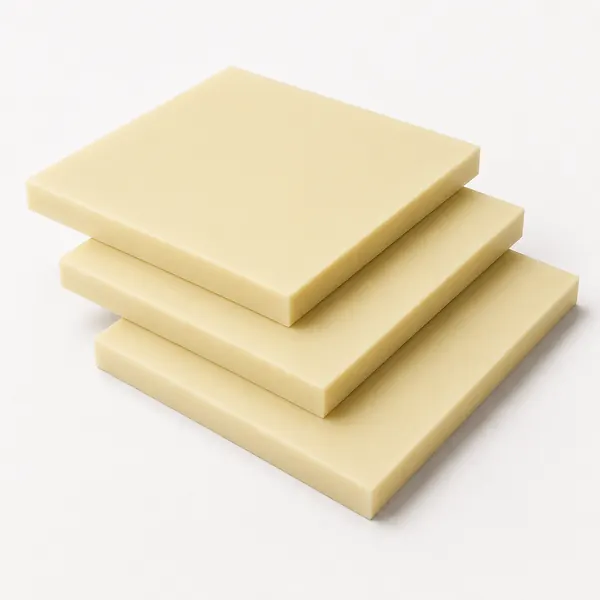
ESD-grade acetal (sold under names such as POM SD, ESD 225, and similar) is a carbon-filled or otherwise conductively modified grade of polyoxymethylene (POM) that provides electrostatic dissipative properties while retaining acetal's excellent machinability, stiffness, and dimensional stability. Standard acetal is one of the most precisely machinable plastics for tight-tolerance components, and ESD grades extend this into semiconductor handling, pick-and-place tooling, and other precision automation where static control is required. ESD POM is typically black and holds tolerances comparably to unfilled acetal.
Working properties
-
ESD performance
ESD acetal grades provide a controlled resistivity path that prevents static charge accumulation and eliminates sudden discharges near sensitive electronic components. The specific resistivity range should be verified against your ESD zone requirements.
-
Machinability and dimensional precision
ESD acetal machines to very tight tolerances and produces excellent surface finishes. It is one of the best materials for precision CNC-machined components where dimensional accuracy is critical — a key advantage over ESD UHMW, which is softer and harder to hold to dimension.
-
Stiffness and rigidity
ESD POM retains the stiffness and rigidity of standard acetal. It is appropriate for structural components, fixtures, and carriers that must resist deflection under load in automated handling equipment.
-
Low moisture absorption
Acetal absorbs very little moisture, contributing to its dimensional stability in service. This is important for precision fixtures used in semiconductor or electronic assembly environments where humidity may vary.
-
Chemical and cleaning agent resistance
ESD POM is resistant to most cleaning agents, alcohols, and mild solvents used in electronics manufacturing. It should not be used in contact with strong acids.
Typical uses
- Semiconductor wafer carriers, end-effectors, and robotic handling fixtures
- Pick-and-place tooling and component trays in SMT assembly
- Precision machined guides, spacers, and brackets in ESD-controlled areas
- Test jigs, burn-in sockets, and inspection fixtures for electronics
Things to confirm before ordering
- Resistivity class — confirm the required surface and volume resistivity range; different grades are available for static dissipative and fully conductive applications.
- Grade — homopolymer or copolymer base; copolymer is preferred for large sections to avoid centreline porosity.
- Colour — typically black; confirm if colour is a factor.
- Certifications — if traceable ESD or material documentation is required for your process, specify at enquiry.
How does POM SD / ESD 225 compare?
-
ESD UHMW →
ESD UHMW offers better abrasion resistance and low friction for wear surfaces but is harder to machine to tight tolerances. ESD POM is the choice for precision components; ESD UHMW for wear rails and sliding guides.
-
ESD MC Nylon →
ESD MC Nylon is available in larger diameter rods (up to 500 mm or more) and is often chosen for large bushings and wear components. ESD POM machines to tighter tolerances and has lower moisture absorption, making it better for dimensional-critical smaller components.
Properties on this page are indicative only — exact mechanical, thermal, and chemical values vary by grade, filler, and manufacturer. Always verify suitability for your specific application before ordering. Need a certified grade? (FDA, UL94, food-grade, medical-grade, ISO) — ask us via WhatsApp and we will advise on what is available.