
Risholite
Cotton-paper Phenolic Laminate (Risholite)
A locally common phenolic laminate for electrical panel insulation, switchgear mounting, and general industrial insulating applications.
Overview
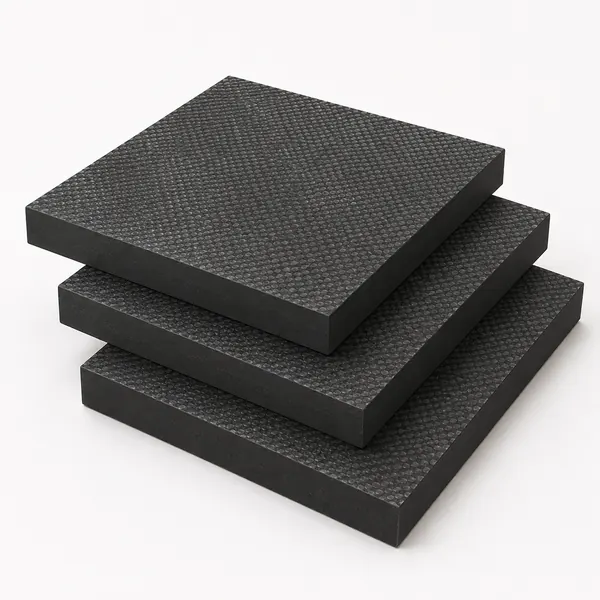
Risholite is a trade name for a grade of phenolic laminate widely recognised in Malaysia and Southeast Asia as a standard electrical insulating board material. It is structurally similar to general Bakelite/phenolic laminate — a thermoset composite of phenol-formaldehyde resin with paper or cotton fibre reinforcement, pressed under heat and pressure. Risholite is used extensively in electrical switchgear, distribution boards, motor control centres, and industrial panel fabrication as an insulating structural material. It is a cost-effective workhorse material for electrical insulation where high precision or demanding mechanical loads are not required.
Working properties
-
Electrical insulation
Risholite provides good electrical insulation for general switchgear and distribution panel applications. It is suitable for bus bar separation, mounting plates, terminal bases, and component mounting in distribution equipment.
-
Machinability
Risholite can be sawn, drilled, and machined using standard workshop tools. Like all phenolic laminates, it produces abrasive dust during machining — dust protection and ventilation are important. The material does not delaminate as readily as paper-base phenolic when drilling if appropriate speeds and feed rates are used.
-
Rigidity and compressive strength
Risholite is rigid and hard, maintaining structural integrity under moderate loads. It is appropriate for mounting plates, standoffs, and insulating structural components in electrical panels.
-
Heat resistance
As a thermoset phenolic material, Risholite does not soften under heat. It is suitable for the elevated temperatures present in loaded electrical distribution equipment.
-
Moisture sensitivity
Risholite should not be used in continuously wet or immersed conditions, as it absorbs moisture over time which degrades electrical and mechanical properties. For humid or wet environments, G10/FR4 is more appropriate.
Typical uses
- Electrical switchgear and distribution board insulating panels and mounting plates
- Bus bar insulation and phase separators in LV distribution equipment
- Motor control centre (MCC) panel insulating components
- General electrical panel insulating backplates and component mounts
- Industrial machine electrical enclosure insulating structures
Things to confirm before ordering
- Thickness — confirm required sheet thickness for your panel design.
- Electrical requirements — confirm required dielectric strength and tracking resistance for your application voltage.
- Moisture exposure — for humid environments, G10/FR4 is more appropriate.
- Certifications — for switchgear manufactured to specific standards, confirm whether the laminate grade meets the required specification.
How does Risholite compare?
-
G10 / FR4 (Glass Epoxy) →
G10/FR4 offers superior electrical insulation, moisture resistance, and is flame-retardant (FR4). For demanding electrical applications or humid environments, G10/FR4 is the better choice. Risholite is the economical option for general insulation panel work.
-
Tufnol →
Tufnol (cotton fabric phenolic) has better impact toughness and machinability than paper-base phenolic. For precision machined electrical components, Tufnol is preferred. Risholite is appropriate for flat panel and sheet insulating work.
Properties on this page are indicative only — exact mechanical, thermal, and chemical values vary by grade, filler, and manufacturer. Always verify suitability for your specific application before ordering. Need a certified grade? (FDA, UL94, food-grade, medical-grade, ISO) — ask us via WhatsApp and we will advise on what is available.