
Bakelite / Phenolic
Phenol Formaldehyde Resin Laminate
A rigid thermoset laminate with excellent electrical insulation and heat resistance for industrial switchgear and electrical panel applications.
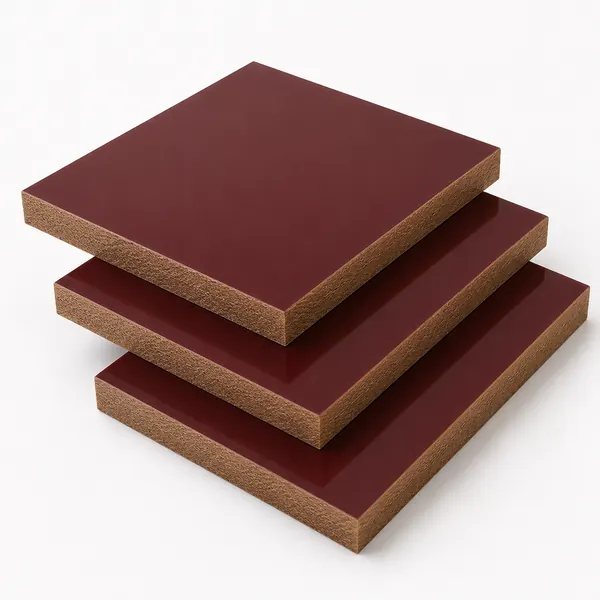
Overview
Phenolic laminate — commonly known as Bakelite — is one of the oldest engineering plastics still in widespread industrial use. It is a thermoset composite produced by impregnating layers of paper or fabric reinforcement with phenol-formaldehyde resin and pressing them under heat and pressure. The result is a rigid, hard, dimensionally stable material with excellent electrical insulation properties and good heat resistance. Unlike thermoplastics, phenolic laminate cannot be remoulded once cured. It is used extensively in electrical switchgear, distribution boards, insulating spacers, and industrial panel work where a stable, insulating, heat-resistant structural material is required.
Working properties
-
Electrical insulation
Phenolic laminates provide good electrical insulation across a range of frequencies and temperatures. They are a standard material for bus bar insulation, switch bases, terminal strips, and electrical panel components.
-
Heat resistance
Phenolic resin is a thermoset — it does not melt when heated, unlike thermoplastics. It can withstand continuous elevated temperatures well above most engineering thermoplastics. However, it will char and degrade if subjected to flame or extreme overtemperature.
-
Rigidity and compressive strength
Phenolic laminate is rigid and hard with good compressive strength, making it suitable for structural insulating components under significant mechanical load. It is more rigid than most engineering thermoplastics at equivalent thickness.
-
Machinability
Phenolic machines by sawing, drilling, milling, and turning, but produces abrasive dust and chips that require appropriate PPE (dust mask or respiratory protection). Tooling wears faster than with thermoplastics. All machining should be done with ventilation.
-
Moisture absorption
Paper-based phenolic grades absorb more moisture than fabric or glass-reinforced grades and should not be used in continuously wet or submerged conditions. Fabric-reinforced grades have better moisture resistance.
-
Types of laminate
Paper-base (Grade XX, XXX) phenolic is common and economical. Fabric-base (Grade LE, CE) offers better impact resistance and machinability. The grade should be matched to the electrical and mechanical requirements of the application.
Typical uses
- Electrical switchgear bases, bus bar insulation, and panel separators
- Terminal strip bases and insulating mounting plates
- Transformer insulation and coil formers
- Industrial motor and generator winding supports
- Jigs, fixtures, and backing plates where electrical isolation is needed
Things to confirm before ordering
- Grade — paper base (XX, XXX) for general electrical insulation; fabric base (LE, CE) for better impact resistance and machinability; confirm which suits your application.
- Electrical requirements — confirm required dielectric strength, tracking resistance, and other electrical parameters for your application.
- Moisture exposure — paper-based grades should not be used in wet conditions; fabric-based grades are more suitable for humid or intermittently wet environments.
- Thickness and size — confirm the required sheet thickness, rod diameter, or tube dimensions.
How does Bakelite / Phenolic compare?
-
G10 / FR4 (Glass Epoxy) →
G10/FR4 offers superior electrical insulation, moisture resistance, and dimensional stability compared with paper-based phenolic. It is also flame-retardant (FR4). G10/FR4 is the better choice for demanding electrical and electronic applications; phenolic is more economical for general industrial insulation work.
-
Tufnol →
Tufnol is a brand of cotton-fabric phenolic laminate with particularly good machineability and impact resistance. It is often preferred for precision machined mechanical components in electrical equipment.
Properties on this page are indicative only — exact mechanical, thermal, and chemical values vary by grade, filler, and manufacturer. Always verify suitability for your specific application before ordering. Need a certified grade? (FDA, UL94, food-grade, medical-grade, ISO) — ask us via WhatsApp and we will advise on what is available.