
Polycarbonate
Polycarbonate (PC)
An exceptionally impact-resistant transparent thermoplastic used for machine guards, safety glazing, and structural panels.
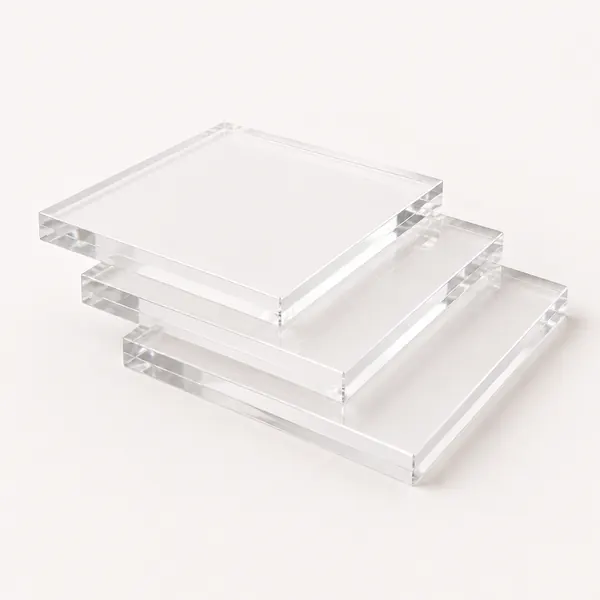
Overview
Polycarbonate (PC) is one of the toughest transparent engineering plastics available, combining high impact resistance with good optical clarity and a useful temperature performance range. It is the standard choice for machine guards, safety screens, and any transparent application where impact or breakage risk is a concern. Compared to acrylic, polycarbonate is considerably tougher but has lower surface hardness (scratches more easily) and is less UV-stable in standard grades — prolonged outdoor exposure without UV stabilisation causes yellowing and surface hazing. UV-stabilised and abrasion-resistant (hard-coated) grades are available for outdoor and high-wear applications. Advance Supplies carries polycarbonate sheet in clear and selected colours.
Working properties
-
Impact resistance
Polycarbonate has exceptional impact resistance — significantly higher than acrylic, glass, or most other rigid transparent materials. It bends and deforms rather than shattering under impact, which makes it the preferred choice for machine guards and protective glazing where safety is the primary concern.
-
Optical clarity
PC offers good optical transparency, though slightly less clear than cast acrylic in standard grades. Hard-coated and optically polished grades can improve clarity and scratch resistance for precision applications.
-
UV stability
Standard polycarbonate yellows and hazes under prolonged UV exposure — this is a known limitation. UV-stabilised grades extend outdoor service life substantially. If outdoor use or long-term optical clarity is required, always specify UV-stabilised grade.
-
Temperature performance
PC performs at higher continuous service temperatures than acrylic and many other commodity plastics. It retains its dimensional stability and impact resistance across a wider temperature range, making it suitable for applications with moderate heat exposure.
-
Chemical resistance
PC is susceptible to stress cracking when in contact with certain chemicals — including some cleaning agents, fuels, and solvents — particularly under mechanical load. Evaluate chemical compatibility carefully before specifying PC in chemical contact environments.
-
Machinability
Polycarbonate machines, saws, and drills cleanly. It requires sharp tooling and appropriate coolant/cutting fluid to avoid heat build-up and stress cracking. Laser cutting is possible but can cause edge hazing — flame polishing or mechanical polishing can restore edge clarity.
Typical uses
- Machine guards and safety enclosures where impact resistance is required
- Safety glazing for industrial equipment, windows, and screens
- Electrical and electronic enclosures and instrument panels
- Roof lights, skylights, and canopy glazing (UV-stabilised grade)
- Protective visors and face shields
- Interior partitions and structural transparent panels
Things to confirm before ordering
- UV stabilisation — specify UV-stabilised grade for any outdoor or prolonged light-exposure application; standard PC will yellow.
- Hard coat — if surface scratch resistance is important (e.g. touch surfaces, windows), specify hard-coated grade.
- Colour — clear is standard; tinted and opaque grades are available but confirm availability.
- Thickness — PC is available in a range of thicknesses; thicker sheet provides greater impact protection but adds weight.
- Edge finish — laser-cut edges may haze; specify if polished edges are required.
How does Polycarbonate compare?
-
Acrylic (PMMA) →
Acrylic is stiffer and gives better optical clarity outdoors without yellowing. Choose acrylic when the application is display or signage with low impact risk. Choose PC when impact resistance or safety glazing performance is the priority.
-
PETG →
PETG is easier to thermoform and has better chemical resistance than PC. Suitable for packaging and display forming where high impact is less critical than with PC. Lower maximum use temperature than PC.
Properties on this page are indicative only — exact mechanical, thermal, and chemical values vary by grade, filler, and manufacturer. Always verify suitability for your specific application before ordering. Need a certified grade? (FDA, UL94, food-grade, medical-grade, ISO) — ask us via WhatsApp and we will advise on what is available.